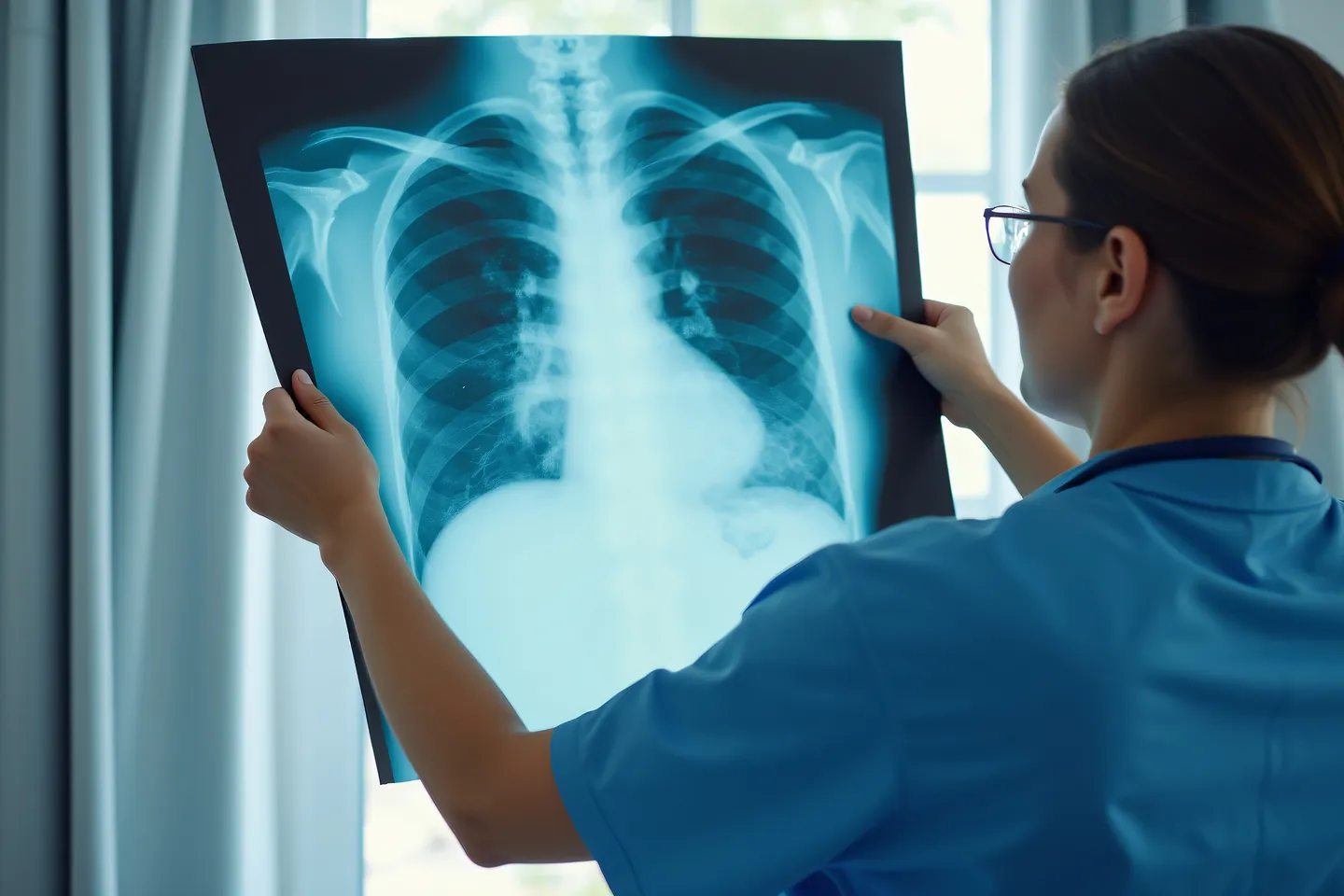
X-ray imaging is one of the most widely used diagnostic tools in modern medicine. It allows doctors to see inside the body without surgery, helping diagnose fractures, infections, lung diseases, and even cancers. This blog explores how X-rays work, their types, benefits, risks, and common applications in healthcare.
What is an X-Ray?
An X-ray is a form of electromagnetic radiation that passes through the body to create images of bones and soft tissues. Different tissues absorb X-rays at different rates, producing contrast in the images. Bones appear white due to their high density, while softer tissues like muscles and organs appear in shades of gray.
The resulting images help doctors assess injuries and diseases with speed and accuracy, making X-rays an essential tool in medical diagnostics.
How Does an X-Ray Work?
- The patient is positioned in front of an X-ray machine.
- A controlled dose of X-ray radiation is directed through the body.
- The X-rays pass through soft tissues but are absorbed by denser structures like bones.
- A detector (film or digital sensor) captures the transmitted X-rays and forms an image.
- The image is analyzed by a radiologist or doctor to diagnose the condition.
Modern digital X-ray technology provides high-resolution images with minimal radiation exposure, improving both safety and accuracy.
Types of X-Rays
There are several types of X-rays used in different medical fields:
- Conventional X-Rays- Used for diagnosing fractures, infections, and lung conditions. Quick, non-invasive, and widely available.
- Chest X-Ray- Commonly used to check for lung infections (pneumonia, tuberculosis), heart size abnormalities, and fluid buildup.
- Dental X-Rays- Helps dentists detect cavities, gum disease, and impacted teeth. Often used in routine dental check-ups.
- Fluoroscopy (Live X-Ray Imaging)- Used for real-time imaging during procedures like barium swallows, catheter placements, and joint injections.
- Mammography- A specialized X-ray for detecting breast cancer.
- CT Scan (Computed Tomography)- A series of X-ray images taken from different angles and combined to create detailed 3D images of internal organs.
Uses of X-Rays in Medicine
X-rays play a crucial role in diagnosing and monitoring various conditions, including:
- Bone fractures and joint dislocations – X-rays help detect broken bones, fractures, and joint misalignments.
- Lung diseases – Used to diagnose pneumonia, tuberculosis, lung cancer, and fluid buildup in the lungs.
- Dental problems – Identifies cavities, infections, and impacted wisdom teeth.
- Cancer detection – Helps detect tumors, especially in mammography for breast cancer screening.
- Digestive system disorders – Barium X-rays help visualize the esophagus, stomach, and intestines.
- Cardiovascular issues – Detects heart and blood vessel abnormalities, including blockages.
Are X-Rays Safe?
X-rays involve exposure to a small amount of ionizing radiation, which can potentially damage cells. However, modern advancements have significantly reduced radiation levels. The benefits of an X-ray far outweigh the risks when used appropriately.
Minimizing Radiation Exposure
- Lead aprons are used to shield sensitive areas.
- The lowest possible dose of radiation is used to obtain clear images.
- Pregnant women are generally advised to avoid X-rays unless absolutely necessary.
Advantages of X-Ray Imaging
- Quick and non-invasive – Most X-ray exams take only a few minutes.
- Painless procedure – No need for incisions or injections.
- Cost-effective – More affordable than advanced imaging like MRI or CT scans.
- Widely available – Found in hospitals, clinics, and dental offices.
Conclusion
X-rays are a fundamental tool in medical diagnostics, allowing healthcare professionals to detect and monitor various conditions effectively. While they involve minimal radiation exposure, safety measures ensure that the procedure remains safe for patients. Whether for a broken bone, lung infection, or dental check-up, X-rays provide critical insights into the body's internal health, making them indispensable in modern medicine.
Early diagnosis leads to better treatment outcomes. If you're experiencing unexplained pain, injury, or require a diagnostic scan, an X-ray can provide crucial insights into your condition. Dr. Gauri Samir Khanapurkar offers precise imaging and expert evaluation to help you get the right treatment. Schedule your X-ray today for timely and accurate diagnosis!

Looking for Expert Care for All Your Health Issues? Your Search Ends Here!
Get personalised treatments, trusted medical advice and compassionate care—all in one place! Don’t wait – take the first step towards better health today!


